Tuesday, October 3, 2017

Capitol Technology University (Since 1927 Located Near Washington D.C.) - IASP, CTSP scholarships help students meet nation’s cyber challenges

Direct Link: http://bit.ly/2fHujKd
 
“I want to be able to do something and contribute to the defense of our infrastructure,” says Emmanuel Onwulata. He’s a master’s student in cyber and information security at Capitol Technology University, and one of two Capitol master’s students to be selected this year for the prestigious Information Assurance Scholarship Program.
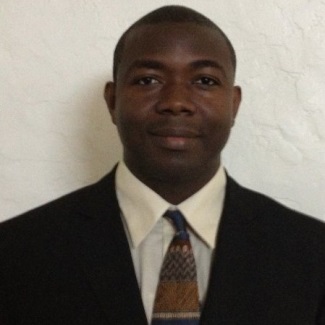
The award “gives me the opportunity to do cybersecurity research, which I love with a passion,” Onwulata says. It’s a critical field nowadays, he adds, because of “the current situation, where a lot of systems are being hacked due to inadequate protections and controls.”
Onwulata and Josh Nelbach are Capitol’s IASP recipients for 2017. Selection for the Department of Defense sponsored program results in a full scholarship package including tuition coverage as well as a $30,000 stipend. After graduation, recipients go on to cybersecurity roles in the federal government.
Nelbach says he is “extremely grateful” to have been selected. Like Onwulata, he sees it as an opportunity to serve the country as it grapples with an increasingly complex array of cybersecurity threats.
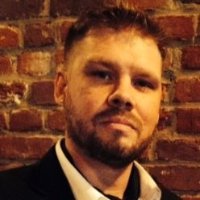
“It’s an investment by the American people in their own security. America is investing in me by ensuring I can gain the best education I can in order to defend our nation,” Nelbach said.
Capitol, a pioneer in the field of cybersecurity education and a designated Center for Academic Excellence (CAE) in the field, has also announced this year’s recipients of the school’s Cyber Transfer Scholarship Program, which is awarded to community college students seeking to complete bachelor’s degrees in cybersecurity. The CTSP is funded under a grant from  the National Science Foundation (NSF).
Andrew Brant (Northern Virginia CC), Willie F Brown (Delta College), Matthew Harris (Volunteer State CC), Brad Howell (Volunteer State CC), Shelly Kleinert (Volunteer State CC), Nathan Little (Delta College), Justin Scheidler (Delta College), Jonathan Taylor (Prince Georges CC), and Jonathan Varner (Augusta Technical CC) will receive the CTSP scholarship, which covers the classes needed to move from an associate’s to a bachelor’s degree. Coursework for CTSP students is offered online, enabling them to earn their degrees without relocation.
Scholarship programs such as the IASP and CTSP not only open doors to students but also help ensure that the country has a corps of well-educated professionals in a critical field, said Dr. William Butler, who chairs the cybersecurity program at Capitol.
The university was among the first to offer academic degrees in the field, including a doctorate established in 2010, he noted.
“Capitol has well-established relationships with employers and government agencies, and we’re an NSA-designated Center for Excellence,” said Butler, who also directs the school’s Critical Infrastructures and Cyber Protection Center. “Our faculty consists of professionals working in the field. They can provide insights and exposure to current trends that the students won’t get elsewhere. As a result, a Capitol education increases students’ chances of success as well as their earning potential.”

Direct Link: http://bit.ly/2fHujKd

Monday, October 2, 2017

Capitol Technology University (Since 1927 Located Near Washington D.C.) - With new facility, Capitol Technology University offers enhanced satellite op training

Link:  http://bit.ly/2xWv6Bb
Learning to command and control and spacecraft requires both knowledge and practice, but being able to obtain hands-on training is often a challenge for students. Opportunities to assist with actual missions are limited and – understandably, given the costs and high stakes involved –little direct responsibility is placed on students.
With the help of the Hammers Company, a MD-based firm that has contributed to numerous NASA and commercial missions, Capitol Technology University now offers a resource that most space engineering programs lack: a platform for real-time training in a virtual satellite environment.
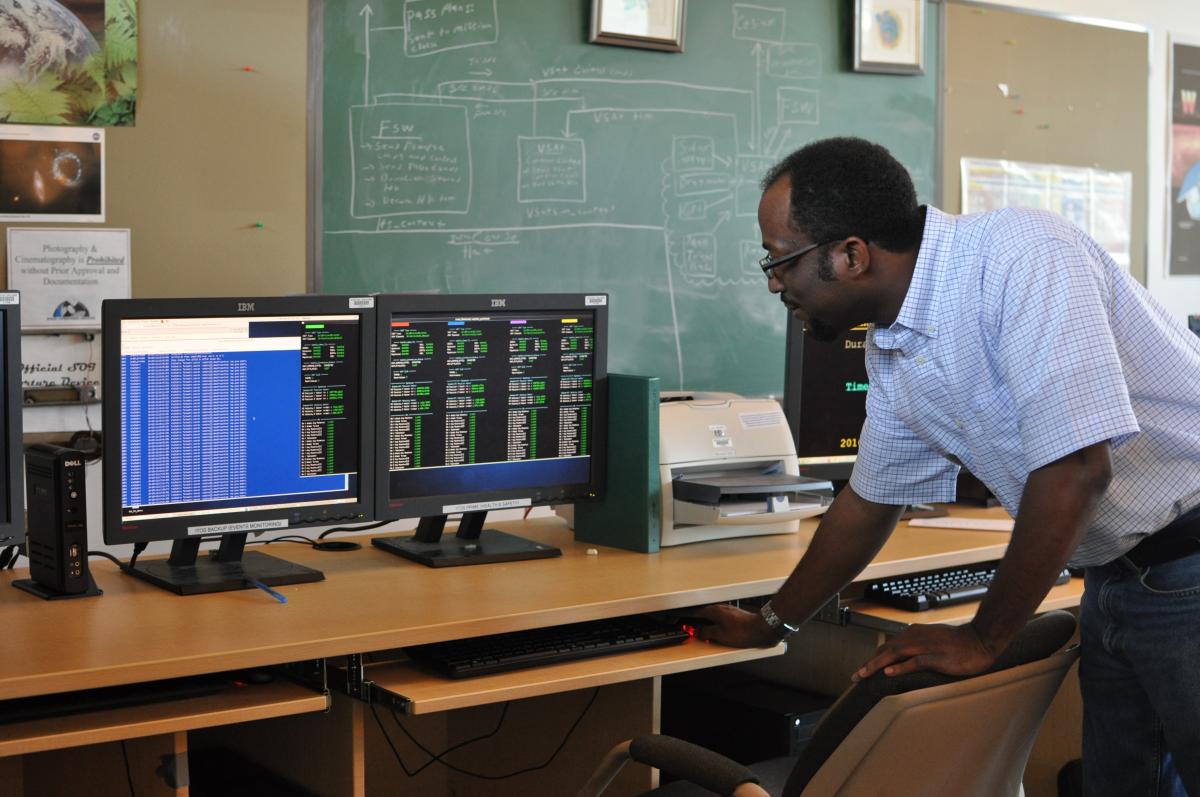
At Capitol’s brand new Space Flight Operations Training Center (SFOTC) students use actual spacecraft software to control virtual satellites, replicating the scenarios they would actually face on the job. The system incorporates a number of tools pioneered by Hammers, which has supported more than 30 NASA missions with real-time simulation, flight, and ground software systems.
 “From the operator’s standpoint, when you’re on the system, it looks exactly like the spacecraft,” explains Marcel Mabson, a software test engineer at Hammers and a Capitol alumnus.
The VirtualSat® spacecraft dynamic simulator “closes-the-loop” with the flight software simulating the actual spacecraft in orbit with sensors and actuators. Firing thrusters, performing spacecraft slews and monitoring the spacecraft telemetry are all possible in the virtual environment. VirtualSat allows the instructor to inject errors into the spacecraft to train the student to detect anomalies and conduct recovery procedures to up-link to the spacecraft. The Galaxy® spacecraft command and telemetry system allows the student to actually operate the virtual spacecraft in real-time and function as a spacecraft operator.
Classroom learning, while vital, can only go so far when it comes to preparing students for flight ops, Mabson said.
 “It’s one thing to read about it in books, but it’s a whole different story when you’re responsible for a real bird that costs several hundreds of million dollars to build and launch,” he said. “The SFOTC will give students a leg-up when they go into the real world and work in operations. They’ll have the experience.”
That includes experience with responding to unexpected events, such as a loss in communications or a systems failure. Instructors can introduce anomalies that the student will have to address. “For instance, your spacecraft has stopped talking to you,” Mabson says. “How do you recover from that? Through the software, students will be able to understand the flow and management in any number of scenarios.”
Capitol professor Rishabh Maharaja, a systems engineer for NASA’s Earth Observing 1 (EO-1) spacecraft, says the SFOTC will be integrated into several astronautical engineering courses at Capitol, and will be available to all students in the program.
It provides “real world experience while they’re still in school. And they can take that wherever they go, whether it’s to NASA or a private company, because the underlying principles are the same.”
Because other disciplines such as computer science and electrical engineering are involved in satellite operations, he anticipates that the new resource will be extended beyond AE to other programs at Capitol as well, he said.
Mabson sums up the SFOTC as “an amazing place for future engineers to learn the engineering behind spacecraft development, operations, commanding, and data analysis.”
“The fact that we can train the students to see how they react in different situations, to get the full stress as it would be in a real NASA mission, is definitely an advantage for the school to have,” he said.
Direct Link:  http://bit.ly/2xWv6Bb