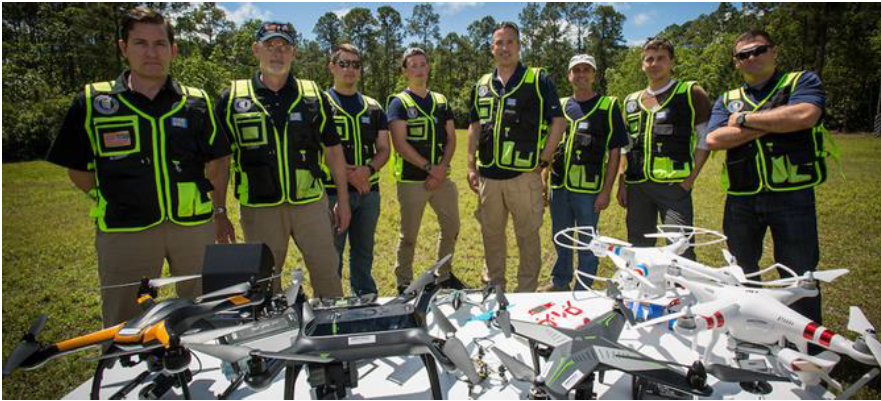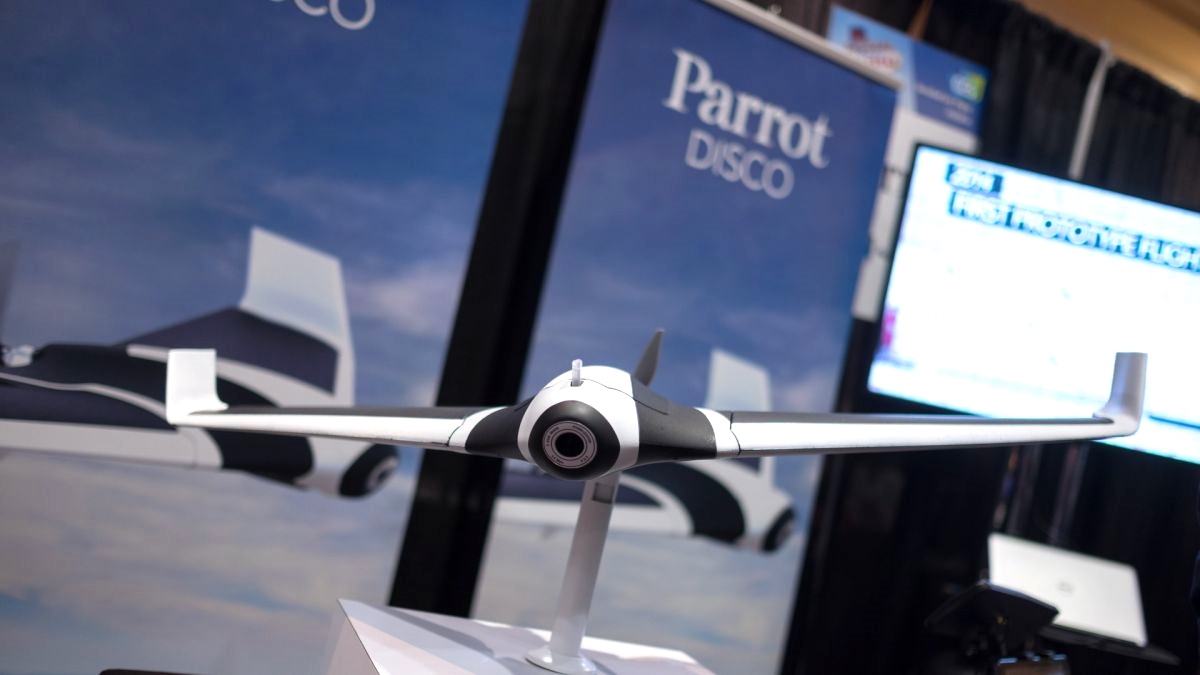
Parrot, a leading manufacturer of small unmanned aircraft systems (sUAS), and Embry-Riddle Aeronautical University’s Worldwide Campus have announced a new academic partnership that will promote curriculum development and the dissemination of unmanned aerial vehicle (UAV) research and real-world applications.
http://news.erau.edu/headlines/suas-manufacturer-parrot-and-embry-riddle-launch-academic-partnership/
Parrot and Embry-Riddle will contribute resources to support advanced UAV research, platform development, education and recruitment, helping Embry-Riddle Worldwide students and faculty stay in the forefront of the sUAS industry’s rapidly evolving technology curve. The partnership also enhances career prospects for Embry-Riddle UAS students as they leave the classroom.
Embry-Riddle will support Parrot with access to its facilities, professional development programs and research opportunities. The university will also provide educational opportunities for eligible Parrot employees, including access to for-credit degree programs and non-credit courses, and the waiving of application fees for the 2016-2017 academic year.
“Increased commercial demand for data from autonomous vehicles requires that we train a new generation of experts to collect this information safely and accurately with a wide range of platforms and sensors. We also need to teach best practices on how to efficiently manage the processing, storage and analysis of this data over time,” said John Cherbini, Director of Enterprise Business Development for Parrot. “Embry-Riddle Worldwide’s global presence and expertise in aeronautical education was a clear fit for the portfolio of Parrot hardware and software solutions. We are excited by the opportunity to help raise the next generation of commercial sUAS pilots.”
“Working with an innovative consumer sUAS manufacturer such as Parrot will enable Embry-Riddle Worldwide to provide our students with unparalleled access to the latest generation of technology, processes and tools. In turn, our students will build and refine the knowledge, skills and abilities essential to ensuring safe, effective and responsible operation in our nation’s shared airspace system,” said Dr. Brent Terwilliger, Program Chair of the Master of Unmanned Systems degree, UAS Discipline Chair and full-time Assistant Professor of Aeronautics at Embry-Riddle.
ABOUT PARROT INC
Parrot INC is the North American subsidiary of Parrot SA. Founded in 1994 by Henri Seydoux, Parrot creates, develops and markets advanced technology wireless products for consumers and professionals. The company builds on a common technological expertise to innovate and develop in three primary markets:
Civil drones: With recreational quadricopters and solutions for professional use.
Connected objects: With a focus on audio and gardening.
Automotive: With the most extensive range of hands-free communication and infotainment systems for vehicles on the market.
Headquartered in Paris, France, Parrot currently employs more than 900 people worldwide and generates the majority of its sales overseas. Parrot has been listed on Euronext Paris since 2006. (FR0004038263 – PARRO). For information, go to: https://www.parrot.com/us, or contact Greg Crutsinger, Scientific Program Director, Parrot INC - T: +1-415-738-0545; gregory.crutsinger@parrot.com.
About Embry-Riddle Aeronautical University’s Worldwide UAS Program
Embry-Riddle Worldwide’s College of Aeronautics is focused on providing students with the most relevant global innovations in UAS and personal involvement in this growing aerospace frontier. Worldwide currently offers a Bachelor of Science in Unmanned Systems Applications, an undergraduate minor in Unmanned Aerial Systems, a Master of Science in Unmanned Systems, a graduate UAS specialization, and professional sUAS education opportunities. Embry-Riddle was one of the first schools in the nation to offer a degree in UAS.
Embry-Riddle Worldwide’s faculty and the courses they teach bring UAS expertise directly into the classroom. Students actively explore new uses and control interface improvements and operational enhancements to ensure an understanding of the technology, while applying best safety practices. Graduates will enter an industry expected to create over 100,000 jobs and have an $80 billion-plus economic impact on the U.S. economy in the next 10 years, once UAS is integrated into the national airspace. For more information, visit Embry-Riddle Worldwide’s College of Aeronautics Unmanned Aerial Systems degree programs information page.